Lean Innovation Guide
The Lean Progress Model explained
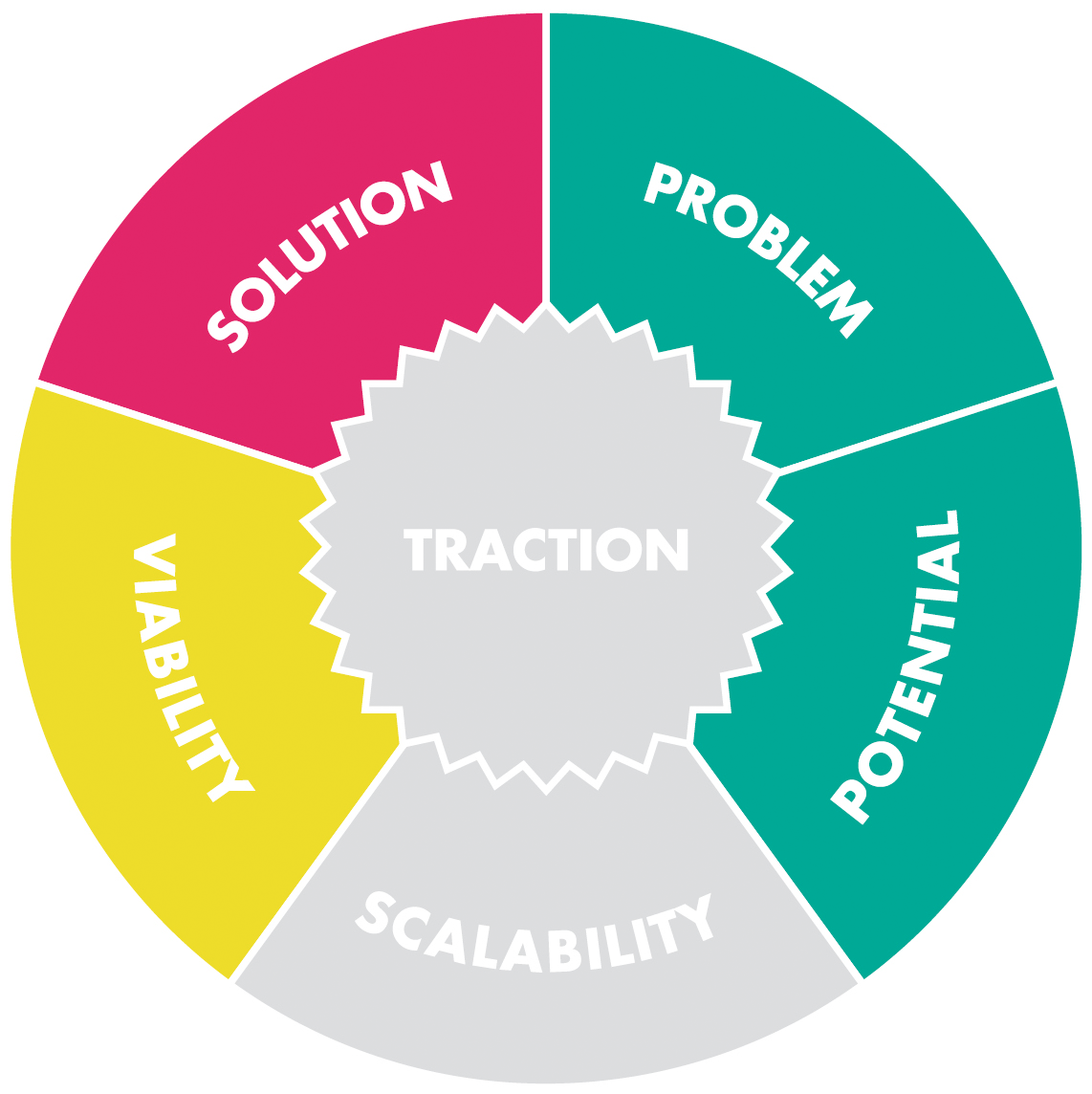
The Lean Progress Model is a meta model for the high-level and transparent management of startup and innovation projects. On one page it shows where a project stands, which questions are still open and what to test next.
Why a model?
Anyone innovating the lean way meets many methods, tools and opinions. The Lean Progress Model puts them in order. It deliberately stays at the highest level of abstraction and limits itself to the six most important success factors. That helps within the project team as much as when communicating with top management or investors.
Lean Innovation instead of Lean Startup
Lean Startup grew out of the startup scene. Lean Innovation covers all innovation processes run the lean way, in a startup as well as in an SME or a large company. The term also includes closely related methods such as Customer Development, Running Lean and agile innovation management.
The six success factors
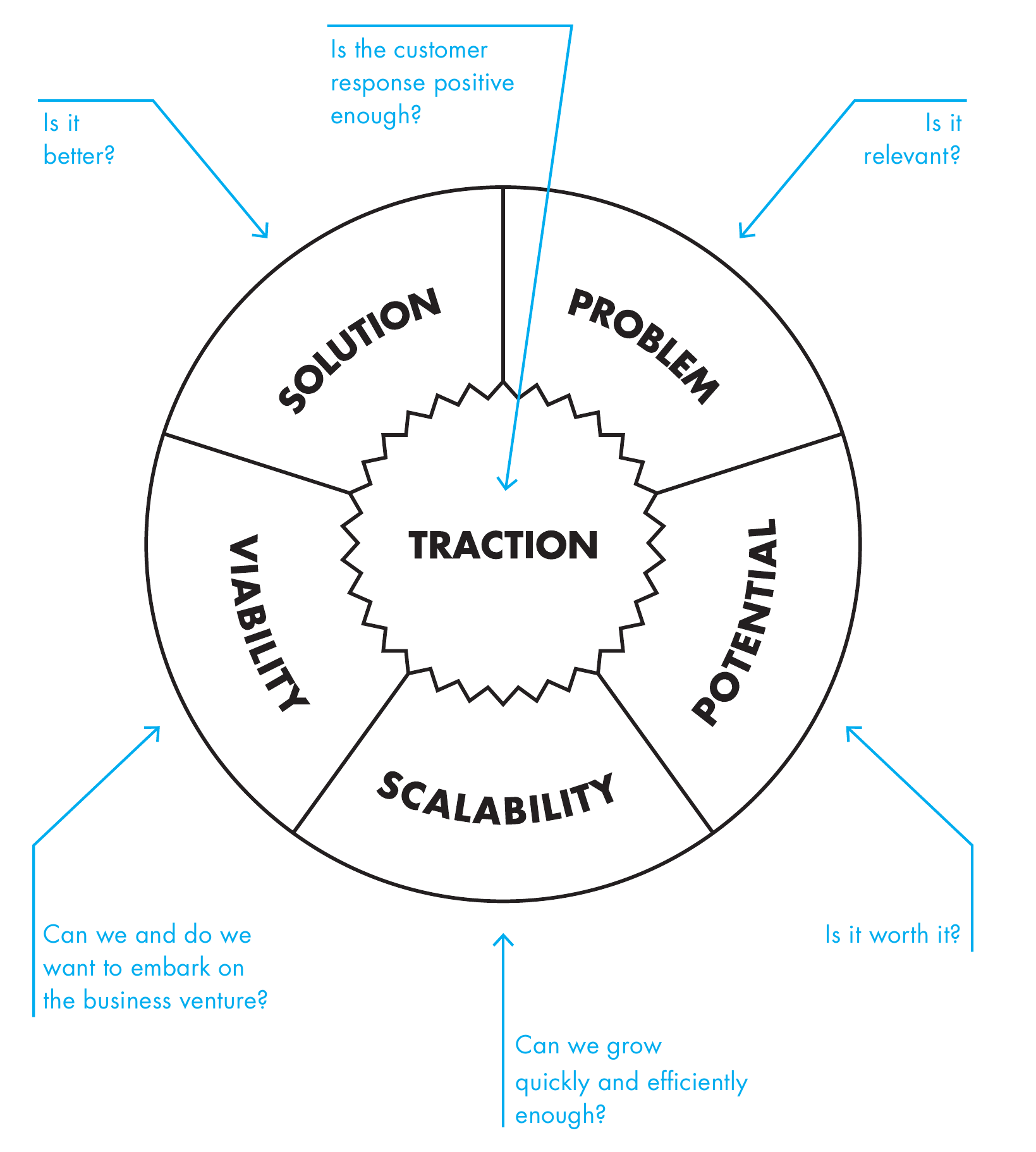
Each success factor has a guiding question and several sub-questions. They guide you through the learning process and show what matters most right now.
- ProblemIs it relevant?
- SolutionIs it better?
- PotentialIs it worth it?
- ViabilityCan and do we want to embark on the business venture?
- ScalabilityCan we grow quickly and efficiently enough?
- TractionIs the customer response positive enough?
Color coding: where we need to learn fast
The model uses the tried and true traffic light logic. You see immediately which fields still need to be tested and optimized. An example: if Problem and Potential are green, Solution is red and Viability is yellow, we first test and improve the solution. After ten to twelve weeks at most, it should be clear whether a relevant problem can be solved with a notably better approach. That is the first phase of the Lean Innovation process, the problem-solution fit.
- Red: negative assessment
- Yellow: unclear assessment
- Green: positive assessment
- Colorless: not yet tested
The model as a poster
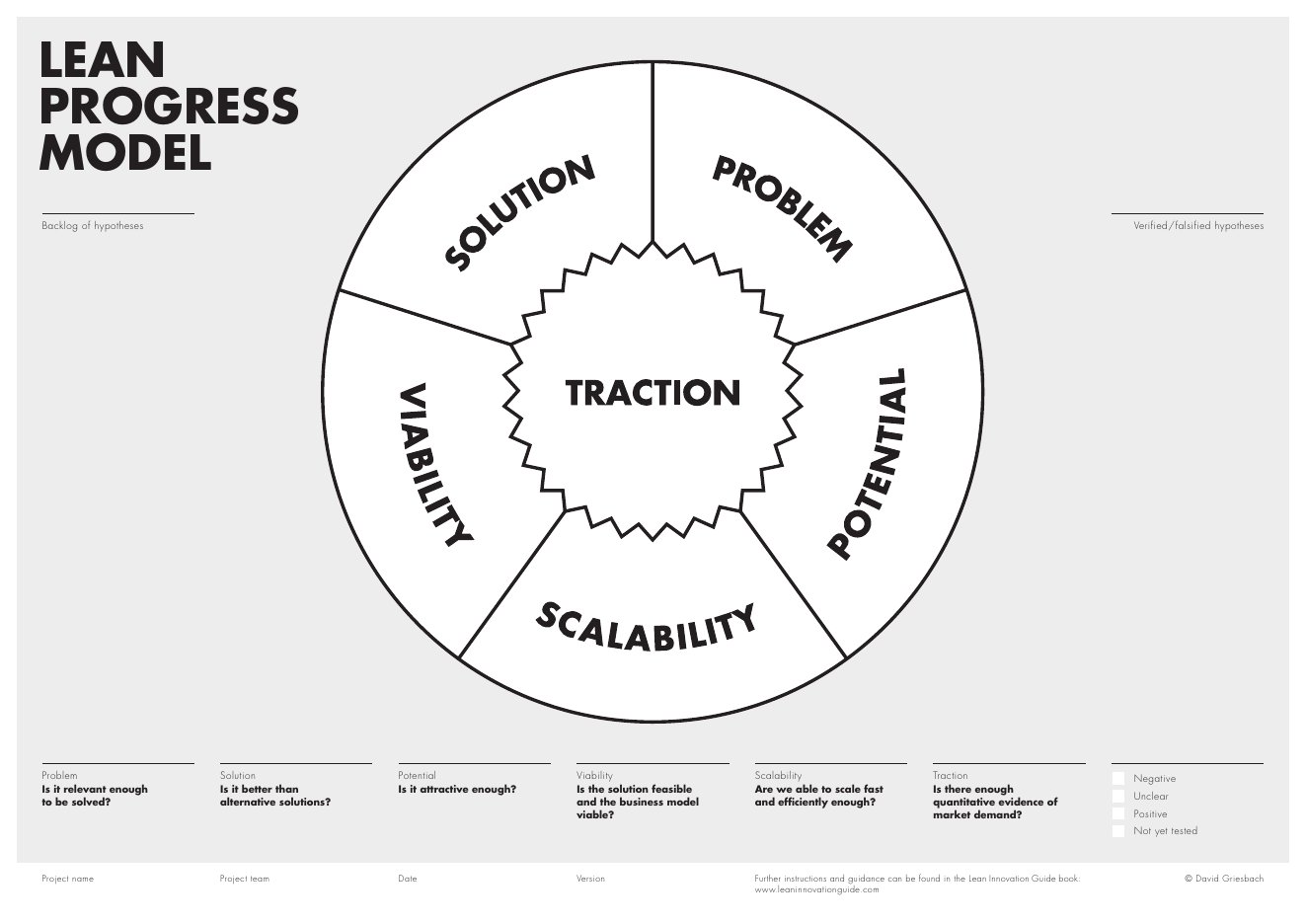
Hung in the project room, the model becomes a steering tool. On the left you keep the backlog of your hypotheses, on the right the verified and falsified ones. You color the fields according to their status.
The model in the book and as a poster
The Lean Innovation Guide takes you through all six success factors step by step. The model is also available as a free poster.